


One of Australia’s largest states has banned the construction of data centers in residential areas and mandated that they must “bring their own renewable energy supply,” part of a slew of rules designed to tackle growing community pushback.
The state of Victoria, home to Melbourne, announced on Tuesday that while data centers were vital to the economy, they would need to take steps to ensure local water and electricity resources were not significantly impacted.
Center-left Labor Premier Ben Carroll will require data centers to match new energy demand with additional generation, paying costs for network upgrades. They will also be required to use only recycled or non-drinking water for cooling.
In addition, data centers will not be allowed in residential areas, with a mandatory buffer zone of 150 meters (164 yards) from any houses.
Prime Minister Anthony Albanese has been pushing for national standards for data centers, attempting to balance taking advantage of the boom in demand with appeasing concerns in local communities. Westpac Banking Corp. estimated that the surge in spending on data centers could be as much as A$225 billion ($160 billion), with the majority in the next three years.
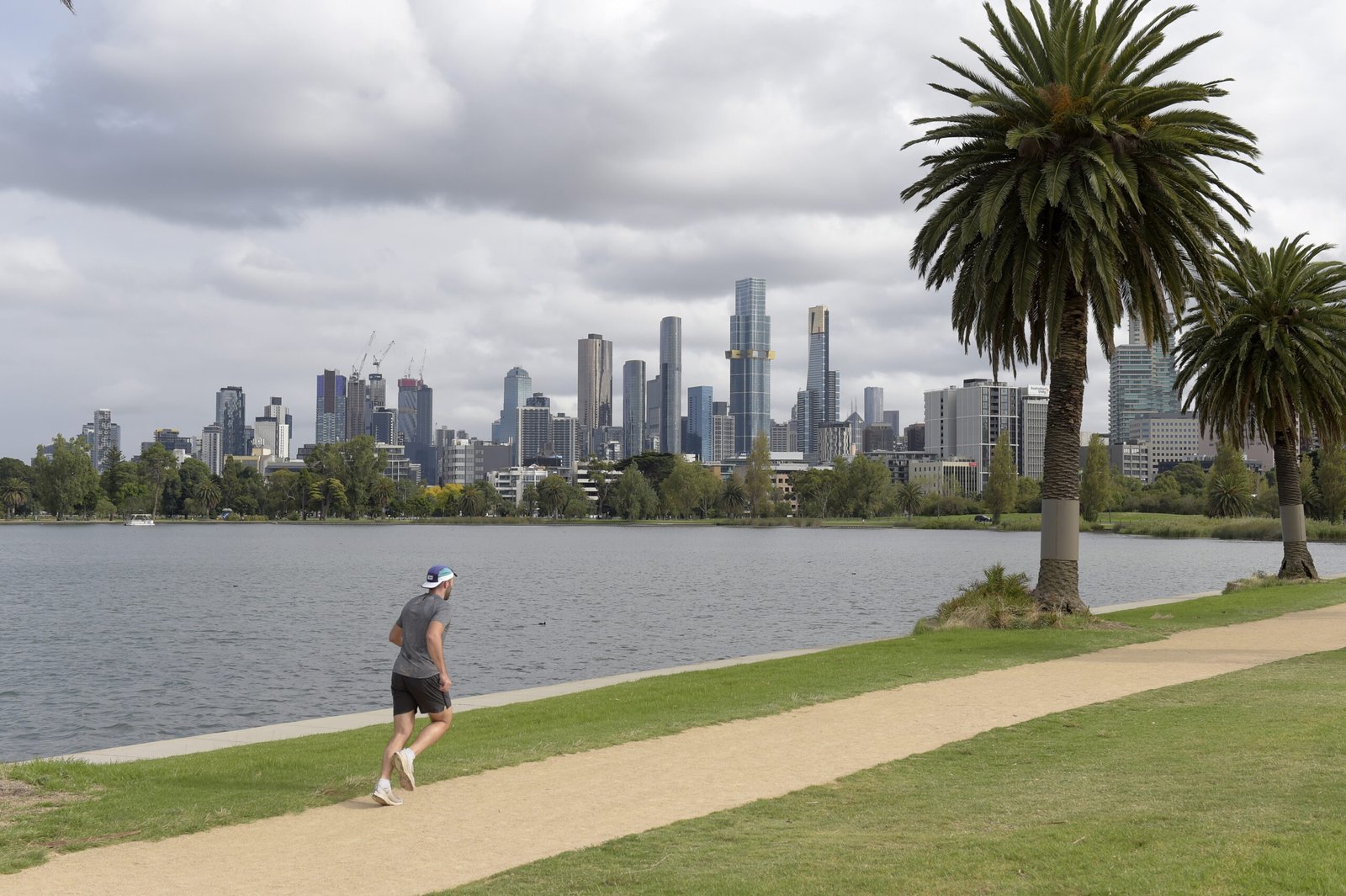
Photograph: A jogger runs in Albert Park in Melbourne, Australia; photo credit: Carla Gottgens/Bloomberg
Copyright 2026 Bloomberg.
Topics
Australia
Was this article valuable?
Here are more articles you may enjoy.
The most important insurance news,in your inbox every business day.
Get the insurance industry’s trusted newsletter
