


When he saw the video, Luqman Saeed knew what was coming. A lecturer at Ulster University in Belfast, he’s spent more than a decade studying how conflicts start and how people are driven to radical ideologies and violent ends. He moved from Pakistan to the UK in 2018, and to Northern Ireland’s capital Belfast in 2022.
For the past two summers, he’s seen anti-migration protests turn into riots on Northern Irish streets, and listened as the UK’s political conversation has drifted rightwards. Saeed argues that some mainstream politicians and elements of the media have increasingly normalized the idea that immigration is “a threat, and needs to be tackled” creating an environment primed for violence. All it takes, says Saeed, is what social scientists call an “information shock”, an incident to trigger an extreme reaction.
“There’s a baseline level of anxiety about immigration,” Saeed says. “In this particular environment, if any tragic incident happens and the perpetrator happens to be somebody of color, that’s the information shock.”
On June 9, that came in the form of a bystander video — shot the previous day — of a dark-skinned man stabbing a White person with a knife on a street in the north of Belfast. “My initial reaction was to come up with a contingency plan,” says Saeed. “How am I going to survive the next few days?”
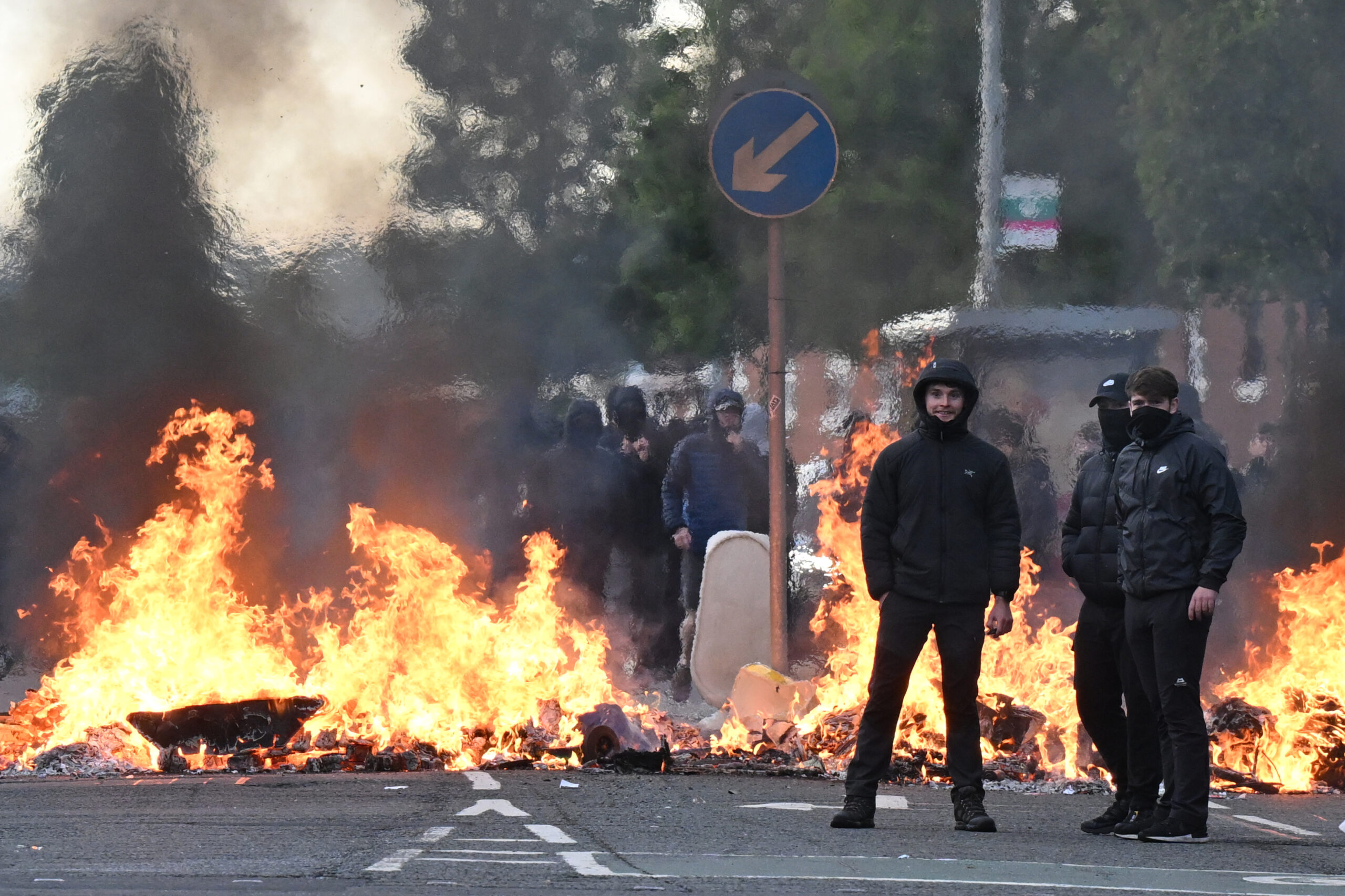
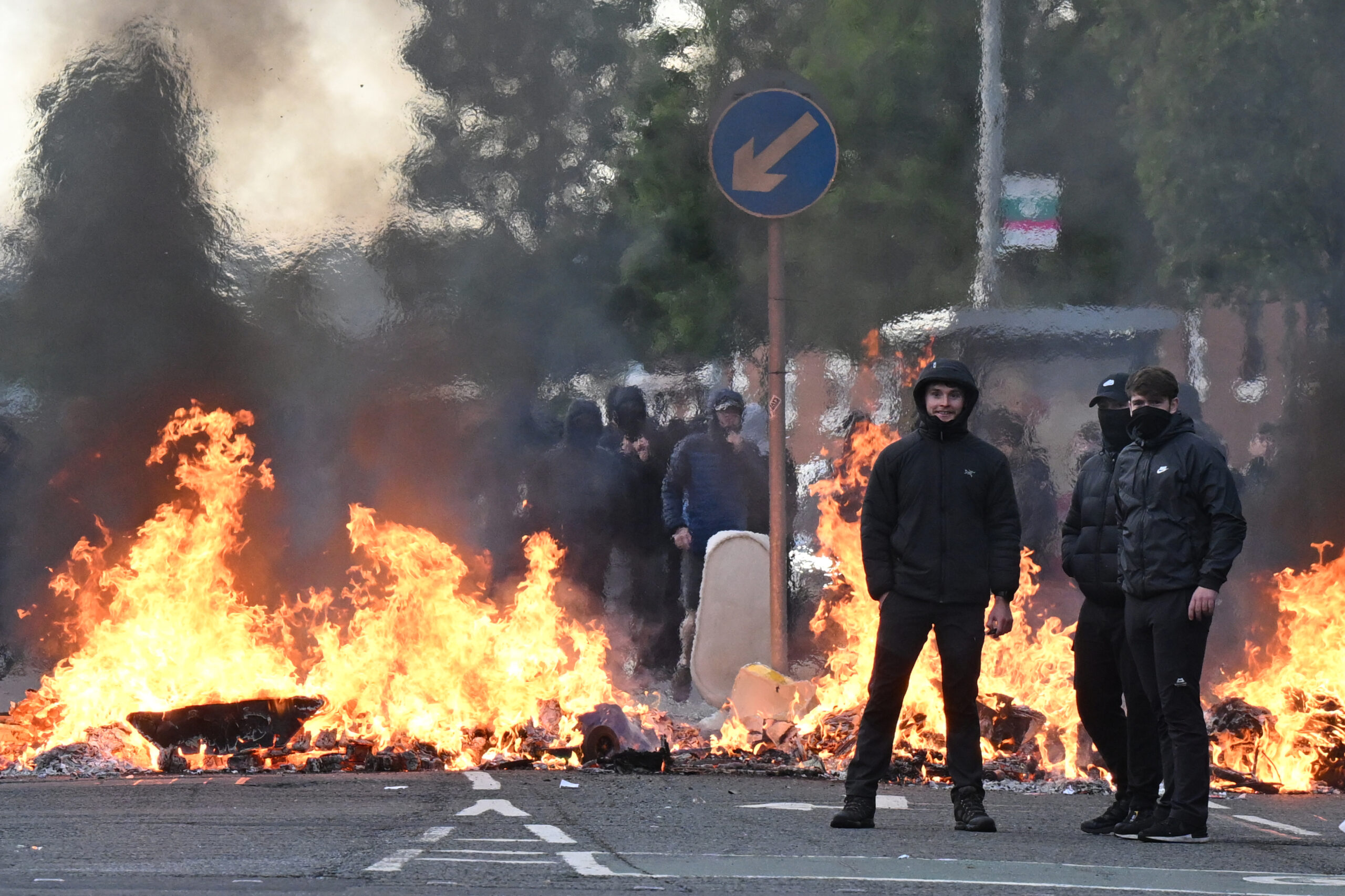
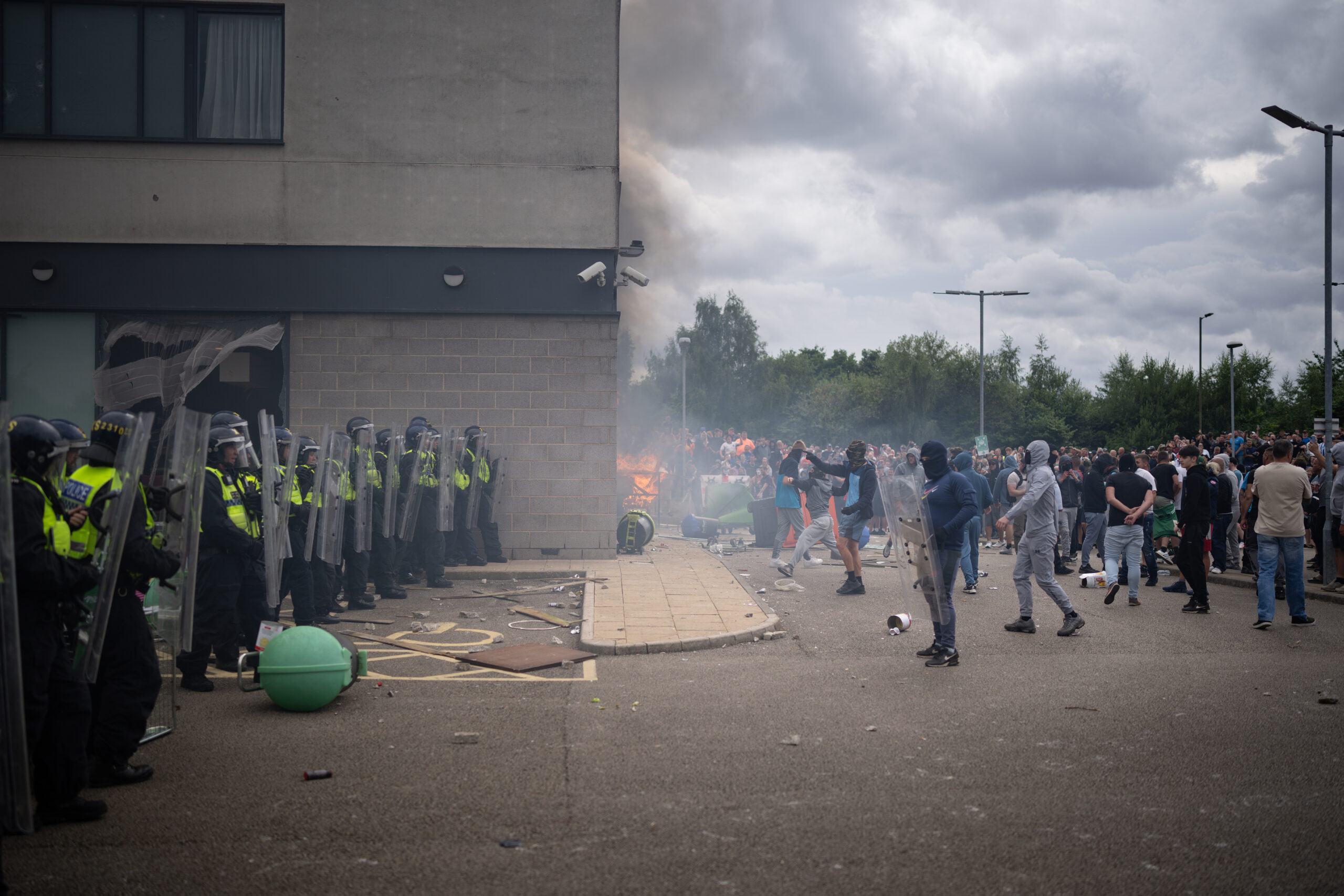
That evening, groups of people, many masked and dressed in black, built barricades, set fire to vehicles and roamed the streets of the Northern Irish capital, evoking previous dark chapters in its sectarian history, when Catholic homes were burned out by Protestant loyalists. Several foreign-born families were forced from their homes.
The unambiguous violent threats to immigrant communities was shocking, Saeed says. “Protest is not the right word to describe it,” he adds. “These were pogroms.”
The disorder in Belfast came only a week after another convulsion of violence in the UK, in the southern English city of Southampton, sparked by the murder of a White teenager, Henry Nowak. The country has experienced three summers in a row of racially-motivated protests and marches, along with a backbeat of attacks on migrants and ethnic minorities. In January, the Crown Prosecution Service said it was handling its highest ever number of hate crime referrals. The UK Home Office reported that in the year ending March 2025 — the most recent figures available — England and Wales experienced a 6% increase in hate crimes motivated by race, and a 3% increase in those motivated by religion. Those targeting Muslims increased by 19% in that period.
Real world threats feed off — and are then recycled back into — an international online ecosystem, where conspiracy myths, far-right ideologies and extremist movements have coalesced. In these online spaces, anger, alienation and a sense of civilizational decline shared by influential figures such as Stephen Yaxley-Lennon — the English far-right activist also known as Tommy Robinson — SpaceX owner Elon Musk, and Rupert Lowe, leader of Restore Britain can help amplify incidents like the attack in Belfast and the fatal stabbing of Nowak.
In that environment, another information shock could come at any time, experts warn. An opinion poll from Belong, a social cohesion organization, found that 62% of British people surveyed believe that large-scale unrest is very likely over the next year.
“The biggest threat right now is that there’s no agreement anymore on a shared reality,” says Julia Ebner, co-executive director of the Institute for Strategic Dialogue think tank. “The resentment that we see goes far beyond just a social media trend. It’s something that lies much deeper.”
Re-Imagining a Dystopian Britain
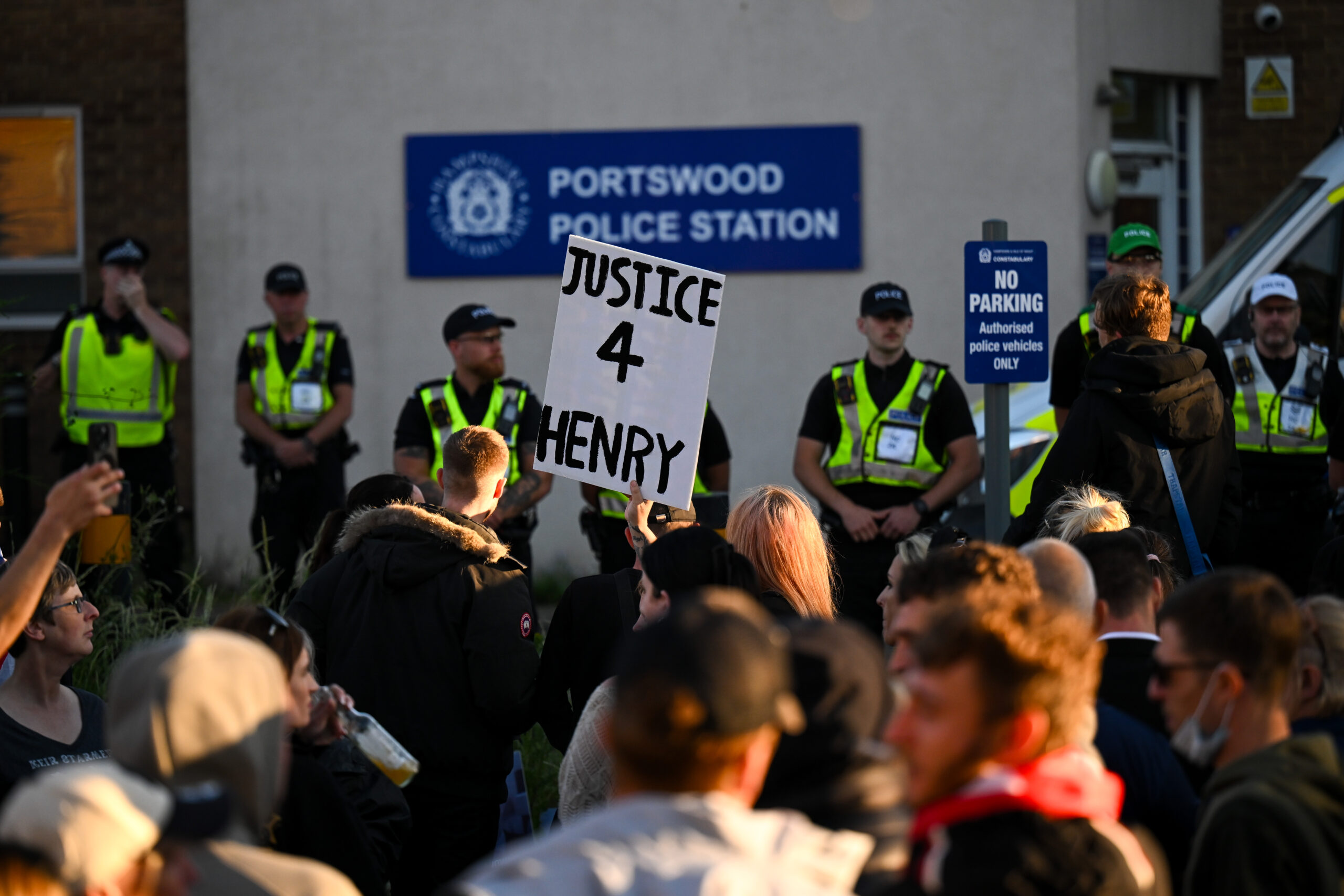
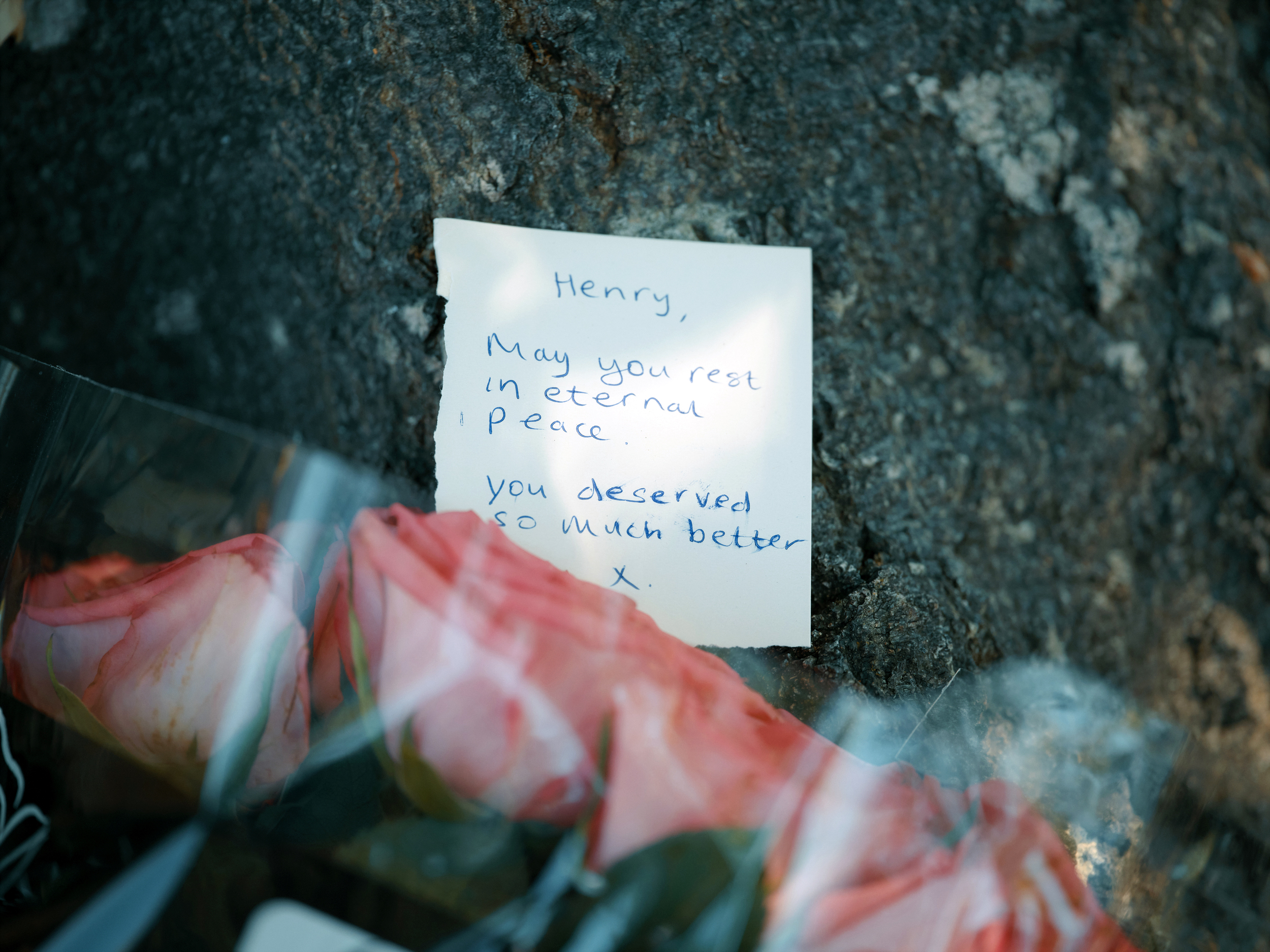
Last December, Nowak, a White 18-year-old, was stabbed by 23-year-old Vickrum Digwa, a British Sikh, in the Portswood neighborhood of Southampton. When police arrived at the crime scene, Digwa told them that Nowak had attacked and racially abused him. Bodycam footage, released to the public on June 1 during Digwa’s trial, showed police handcuffing Nowak as he lay dying. WhenNowak told the officers that he couldn’t breathe and that he’d been stabbed, one replied: “I don’t think you have, mate.”
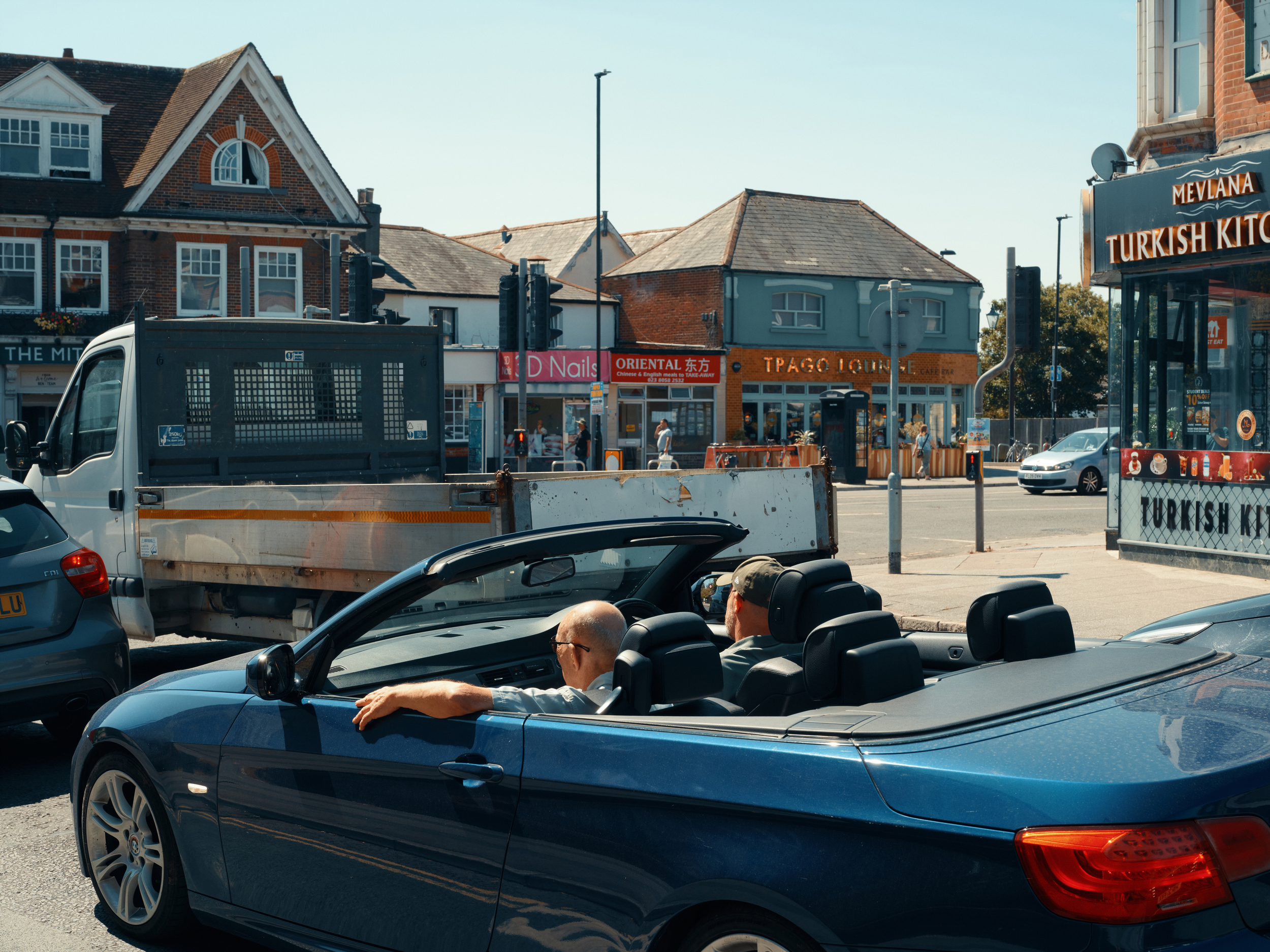
Portswood is a low-rise district, with streets of terraced houses branching off a long commercial road that looks like many others in the UK, with lines of vape shops, charity stores and takeaways separated by boarded-up storefronts. It’s diverse, ethnically and economically, with low-income areas abutting some of the city’s wealthier postcodes and is home to a large student population.
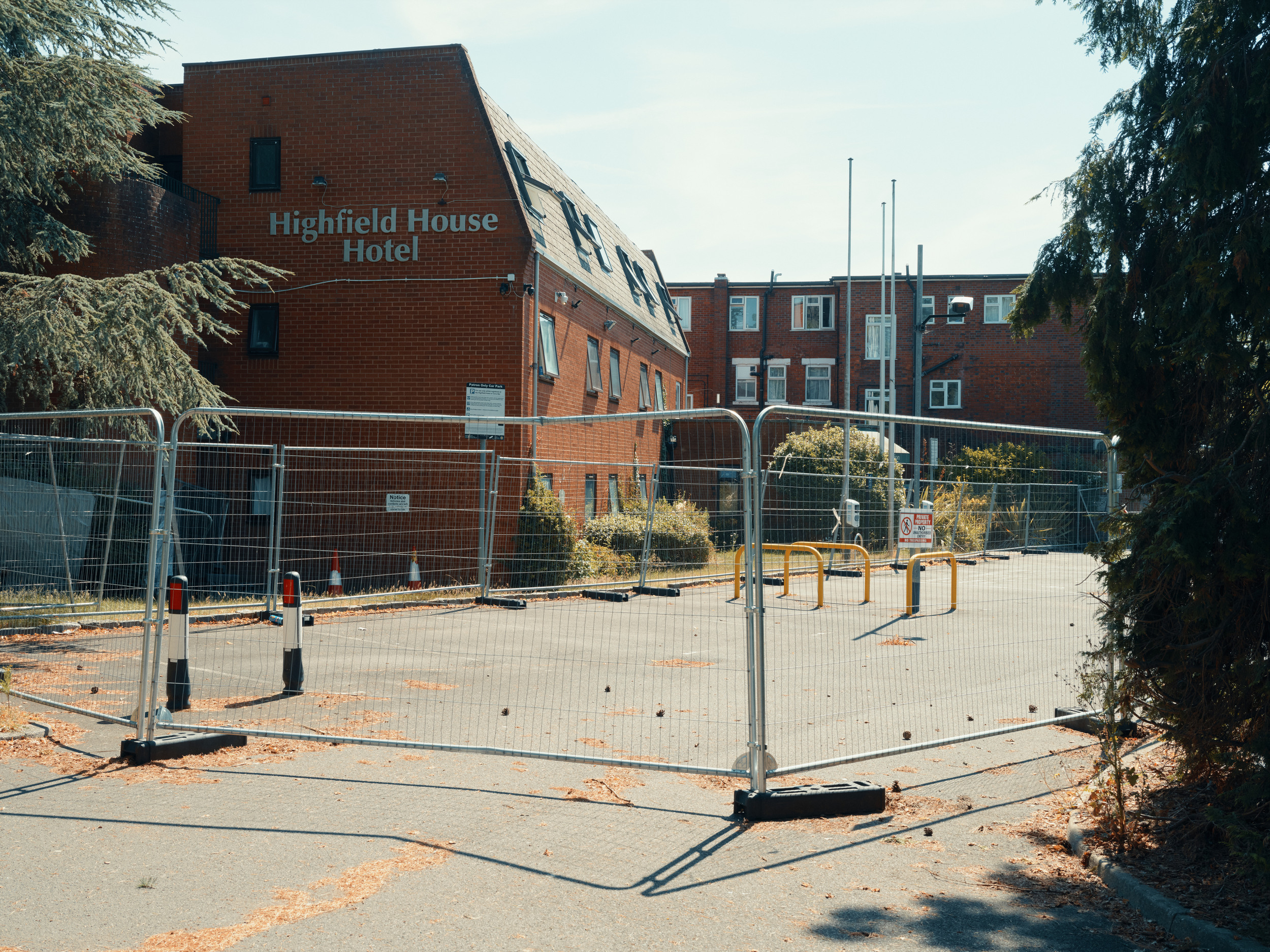
In recent months a group calling itself the Southampton Patriots has held regular protests outside the Highfield House Hotel, a down-at-heel redbrick complex at the north end of Portswood Road. The hotel was booked out by the government last year for use as temporary accommodation for asylum seekers waiting for their claims to be processed. There’s a nationwide backlog of tens of thousands of applications for asylum. While applicants wait for a decision they aren’t allowed to work and are housed by the state in places like Highfield House Hotel.
Such so-called “migrant hotels” have become physical manifestations of the UK’s struggles with irregular migration. They’re often located in areas of towns and cities that have stagnated, where hotel owners can make more money turning their rooms over to the state than they can renting them to visitors. That’s made them powerful symbols for right-wing groups, who present them as evidence of the government displacing locals to house migrants in these communities.
Men make up the majority of asylum seekers, and some in the far-right have used that to promote another narrative: that the hotels harbor violent criminals who pose a danger to local communities, and women and girls in particular.
Bloomberg News set up a new X account in late June, expressing an interest in UK politics and news at signup. The ‘For You’ feed was instantly filled with posts purporting to show violence by “migrants” in the UK and Europe — some from anonymized accounts, others from recognizable figures, such as Yaxley-Lennon.
The posts often include bystander-shot footage that appears to show violence by non-White people in European cities. Some of the footagegains new life as it spreads between groups and is then repurposed with the supposed perpetrator, victim and location changing to match the particular concerns of different nativist groups. One video that Bloomberg News saw circulating on X variously claimed to show a “migrant” harassing people on a beach in several different locations in the UK, but also in France.
The core narrative that Europe and the UK are under attack resonates within a network made up of Islamophobic groups, Christian nationalists, anti-migration street movements, far-right politicians and conspiracy communities fixated on more extreme myths.
Experts who study these groups say that since Covid, they have increasingly coalesced. Pandemic-era anxieties interbred with conspiracy theories about authoritarian elites, increasingly taking on racist and nativist components. As extremist content is cross-posted between messaging apps and social media, including X and Telegram, it gains mainstream traction aided by platforms’ algorithms. YouTube also plays a role, with research showing that it’s effective at guiding people down conspiracist and racist “rabbit holes”.
X and YouTube didn’t respond to requests for comment for this story.
“We had quite a fractured landscape among the far-right, and also the conspiracy myth movements. Now it’s increasingly coming together,” ISD’s Ebner says. That’s created an online, hair-trigger mass of “very different people who share some underlying concerns and some underlying grievances and fears and anger and deep emotions,” who are constantly in search of events they can seize on to validate their beliefs, she says.
Events in the UK have taken on a particular salience within those networks. A heavily fictionalized, dystopian version of Britain has taken root in far-right and conspiracy networks — one where the state aggressively cracks down on free speech, where crime is out of control and areas of the country operate under Islamic Shariah law.
A Street Riot Born Online
Although not deliberate, the official bodycam footage of Henry Nowak’s death was almost perfectly calibrated to break out. It showed a White man apparently being punished after a crime committed by someone of South Asian heritage.
A call for protests by the Southampton Patriots on June 2 — the day after Digwa was convicted of murder — was quickly amplified by other anti-migrant groups and politicians in the UK and abroad. Nowak’s case was picked up by rightwing figures on social media, including Yaxley-Lennon and Musk.
Local protest numbers were swelled by activists from across the south of England, affiliated with an overlapping constellation of groups, including members of the Islamophobic street movement Britain First, and members of Turning Point UK, a British offshoot of an American far-right group. Yaxley-Lennon arrived, along with other prominent figures with large social media followings, livestreaming from the streets back to their online audiences of hundreds of thousands of followers.
Within hours, the demonstrations had turned into a riot. Locals say that groups of men approached them and demanded they join the march, others that their gardens were raided for objects to throw. At least 11 police officers were injured and 13 people so far have been convicted of violent disorder and related offenses.
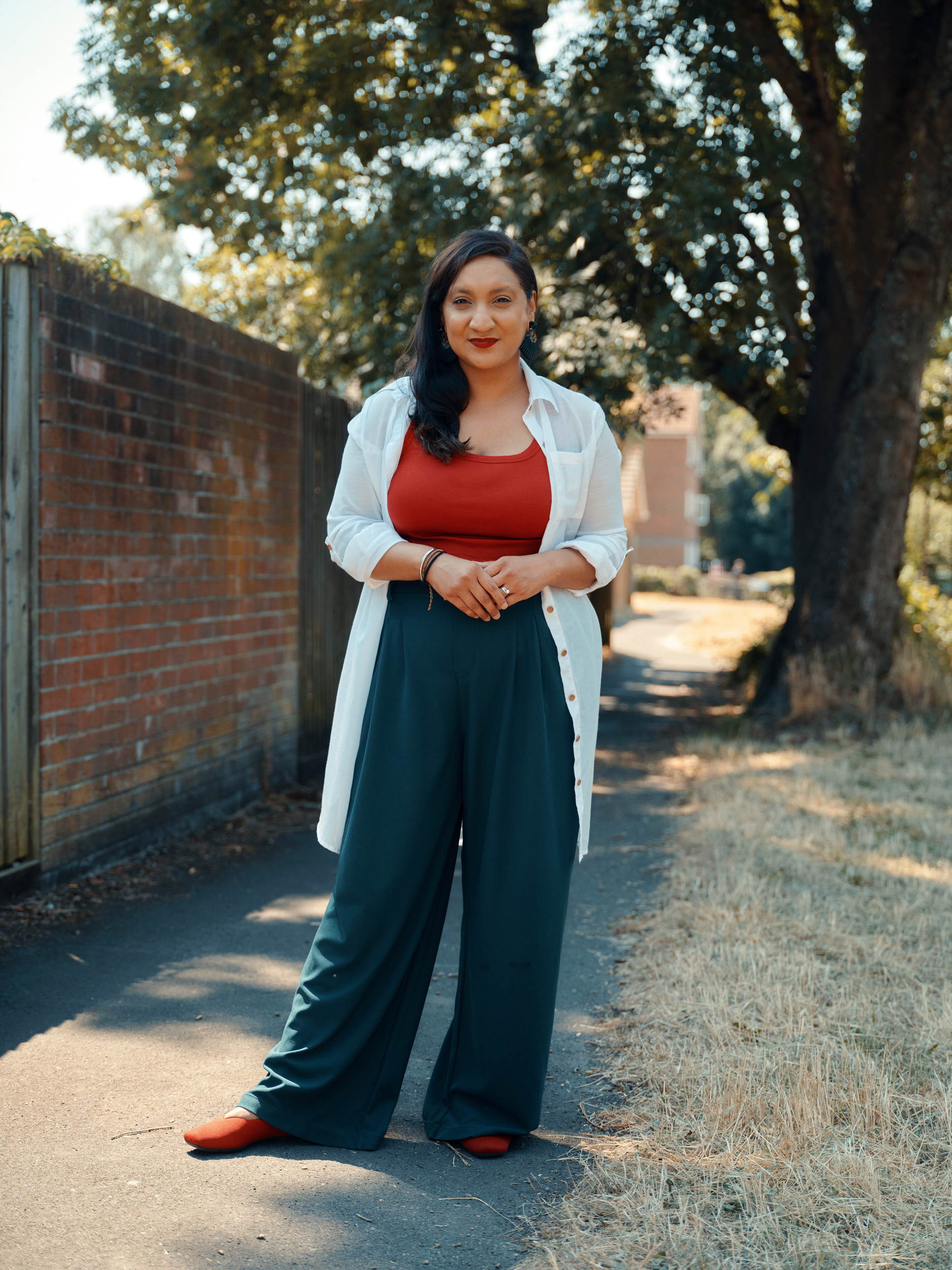
For people in the area, the violence felt imported, says Satvir Kaur, the Labour member of parliament for the Southampton Test constituency, which includes Portswood. “We had hundreds of people from outside of our city coming inside our city, kind of terrorizing local communities,” she adds. They were “intent on coming to our city to cause harm, disruption, chaos, vandalism.”
After more than 40 years of living in Southampton, Kaur believes there’s “real fear” with people afraid to go to work or to places of worship weeks after the violence, she says. “It’s an atmosphere that I’ve never felt before in my city, and that’s really sad.”
The parents of Henry Nowak appealed for his death not to be used to sow division, but instead the tragedy was “weaponized,” says Kaur.
“Social media has had a huge part to play in this,” Kaur adds. “Trillionaires from wherever they are in the world, quite frankly, can stick to their own business and leave Southampton to deal with Southampton issues.”
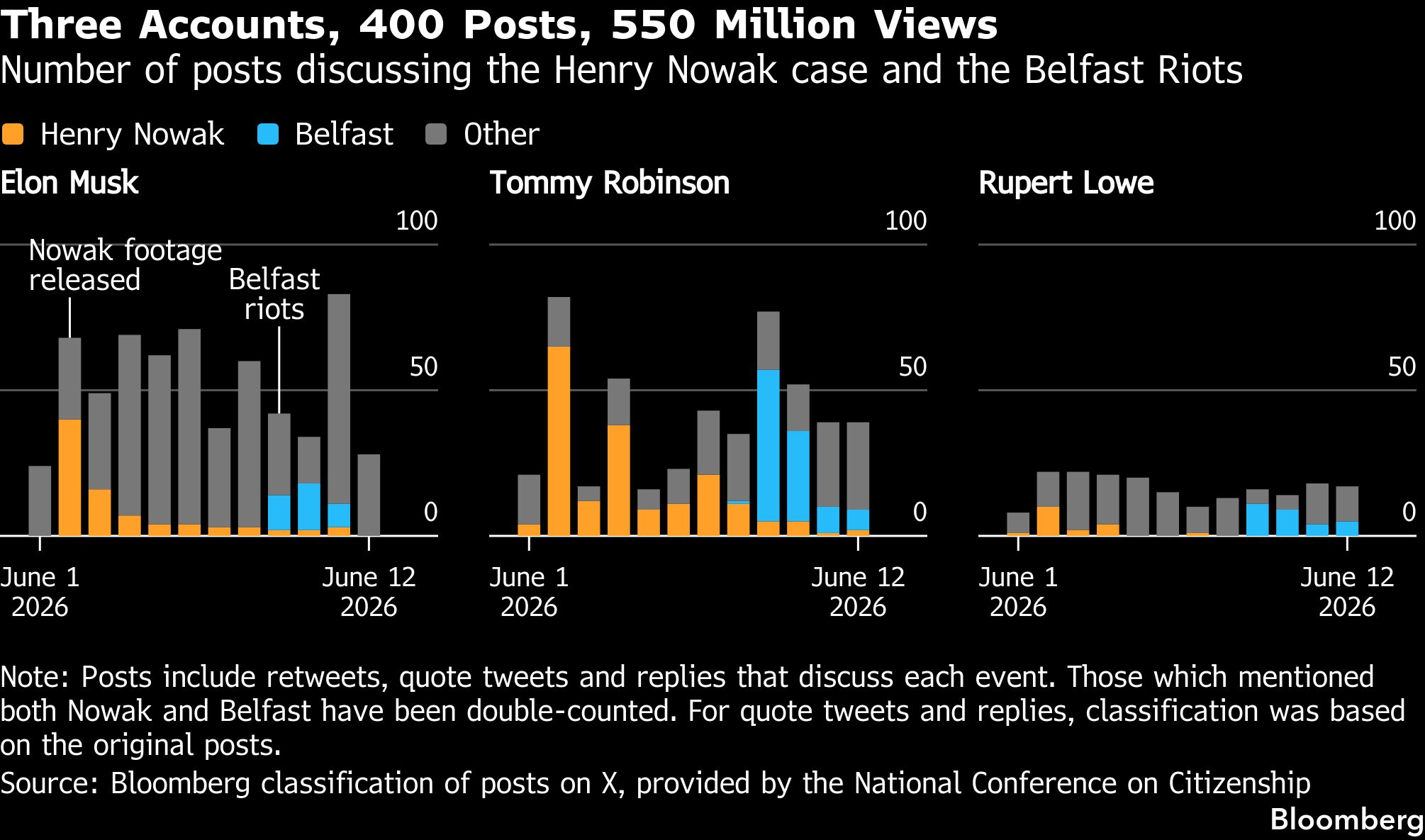
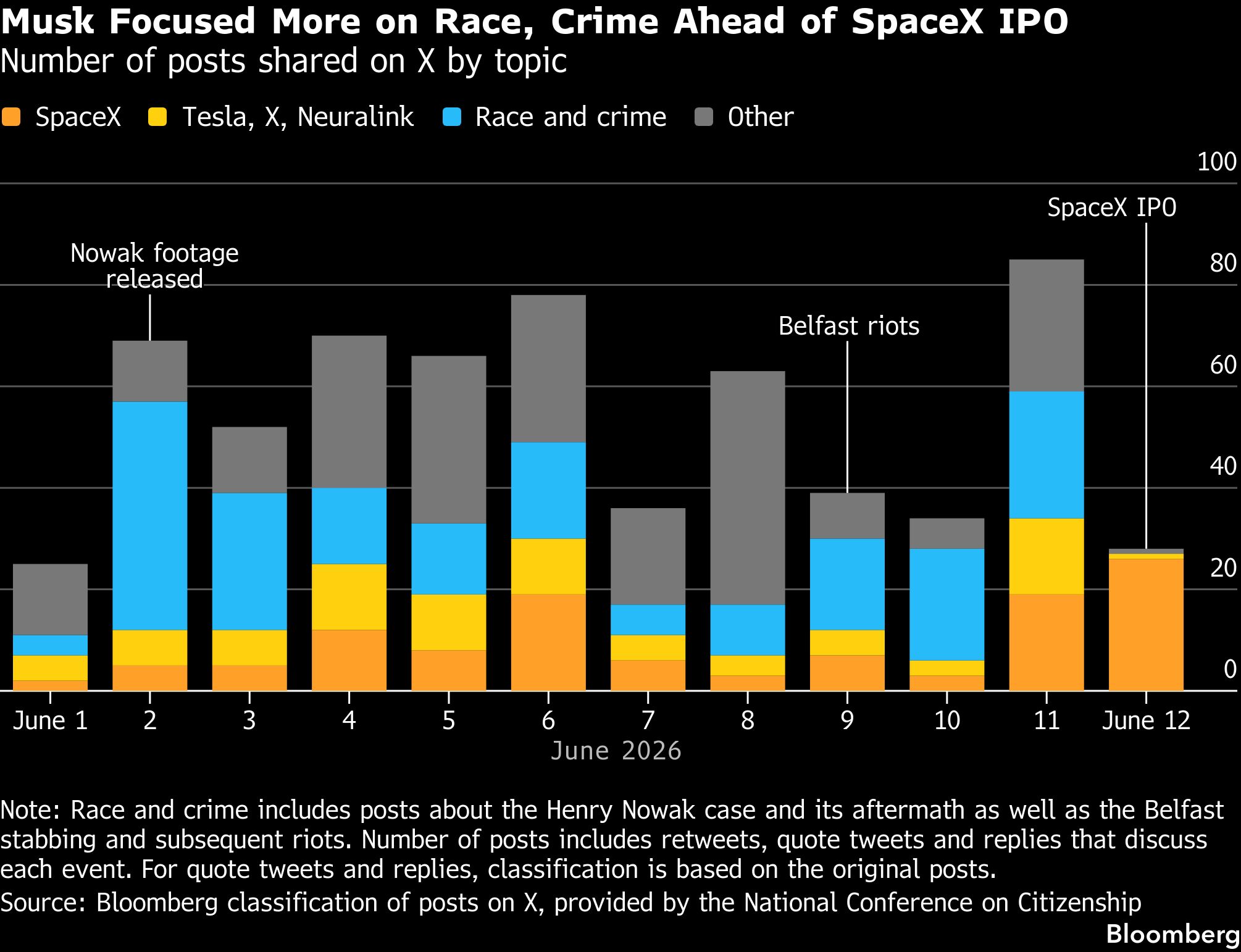
As distant as Portswood is from the Texas headquarters of SpaceX — the social media to Martian colonization conglomerate that now owns X — Musk has shown a consistent interest in events in the UK. In the 10 days after the sentencing of Digwa on June 1, Musk shared posts around the Nowak murder more than 80 times. Digwa has since appealed against his conviction.
The tech billionaire Musk, was an early booster of the “two-tier policing” idea — a conspiracy myth that the British police give preferential treatment to ethnic minorities — which he began amplifying two years ago, after another flare up of violence that followed the fatal stabbing of three young girls in Southport by a Black British man.
The subsequent nationwide protests and riots — which included an attempted arson on a hotel housing asylum seekers in Yorkshire — led to more than 1,800 arrests.
Via his X account, which has 240 million followers, Musk has routinely boosted Yaxley-Lennon’s posts, predicted “civil war” in the UK, addressed far-right marches and promoted the hard right fringe party Restore, led by its sole MP, Lowe.
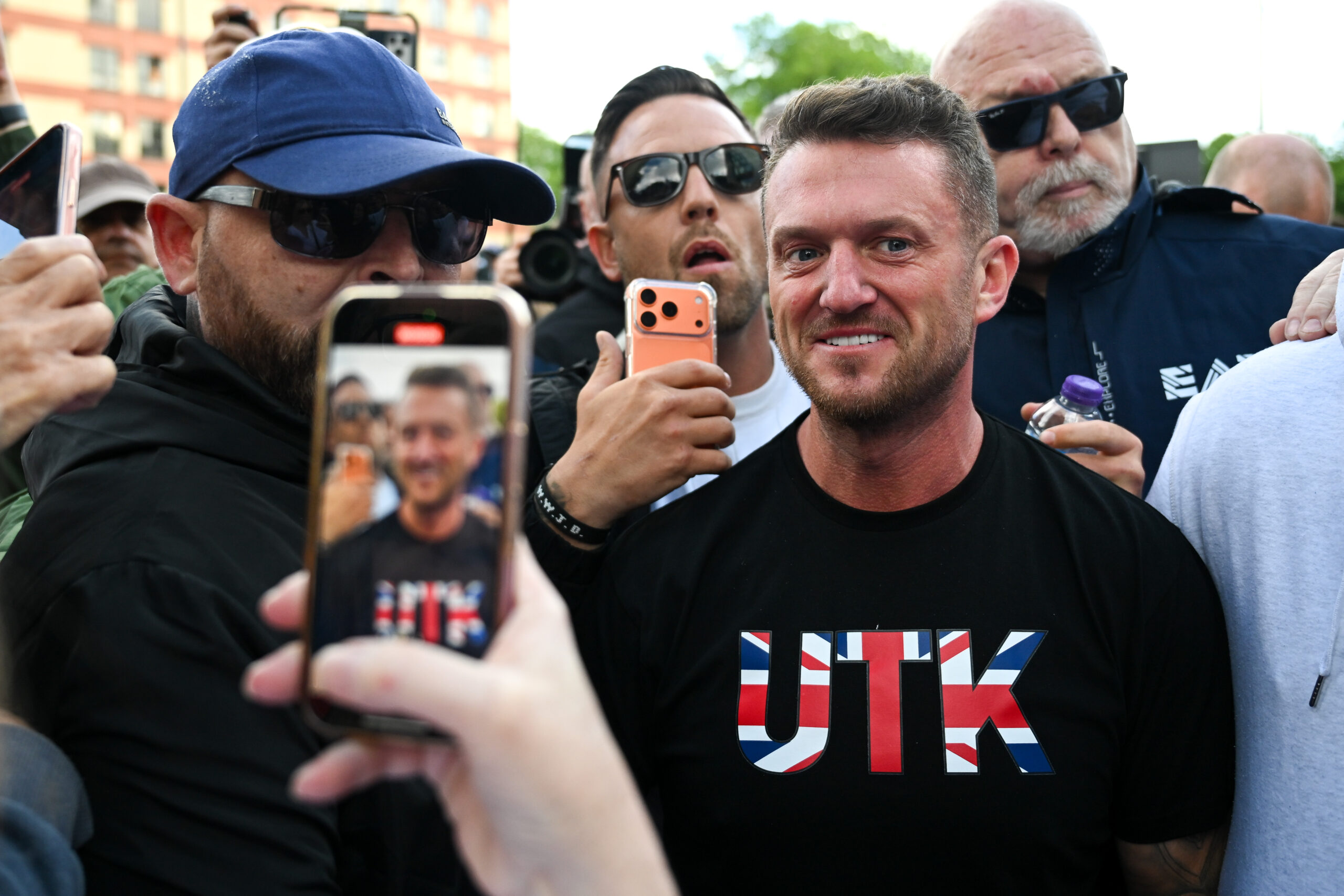
On June 9, the day the Belfast video went viral, Musk — who at the time was finalizing the SpaceX IPO — reposted a Yaxley-Lennon comment, that “Only by protesting REPEATEDLY and LOUDLY will there be any change!!”
Musk, Yaxley-Lennon and Lowe collectively shared more than 150 posts about the Belfast stabbing and subsequent riots between June 9 and 12. They were viewed more than 150 million times, attracting more than 500,000 reposts, a Bloomberg review of X data found.
Anti-immigrant groups used X, Facebook, Telegram and Instagram to call for protests and road closures in Belfast. One message that circulated through several groups read: “be prepared to fight or be arrested”. These messages were picked up by national, then international networks, which helped amplify them. Yaxley-Lennon reposted messages calling for “torches and pitchforks” as well as advice for protesters to not take phones and recording devices to avoid leaving any digital footprint.
Lowe and Yaxley-Lennon didn’t respond to requests for comment.
“It’s become a pattern. We’ve seen this situation unfold: an emotive event that feeds into a White victim narrative, then an online discussion — ‘there needs to be a flash demonstration to protest this’,” Paul Jackson, professor in the history of radicalism and extremism at the University of Northampton, says. “It’s becoming a kind of a practice. Here’s a time, here’s some basic instructions — wear dark clothing, that sort of stuff — trying to create some sort of mobilized action.”
Yaxley-Lennon didn’t make it to Belfast — at the time of the violence he was in Moscow, where he met Musk’s father, Errol.
A 30-year-old man, originally from Sudan, has been charged with attempted murder after the Belfast attack.
Shattered Sense of Security
Regulators have struggled to find ways to compel social media platforms to address the spread of hate speech and calls to violence, which they are supposed to remove under the UK’s Online Security Act.
As they’ve gathered weight online, these conspiracies, extreme views and terminology have crept into the mainstream. The US government’s warnings of “civilizational erasure” in Europe echo the Great Replacement theory— a conspiracy myth that claims Western elites are working to engineer the replacement of the White population with immigrants. In late June, a US State Department official, Sarah Rogers, gave a speech to a right wing political conference in London in which she referenced several far-right memes and alleged that the UK police arrest thousands of people over “freedom of speech” offenses every year, but “handcuff you as you bleed to death if you’re white,” in a reference to Nowak’s death.
A State Department official said that Rogers’ comments “underscored” the US priorities including promoting free speech and stopping illegal and mass migration. The official sent Bloomberg a link to a tweet from a right-wing commentator backing Rogers’ comments as supporting evidence.
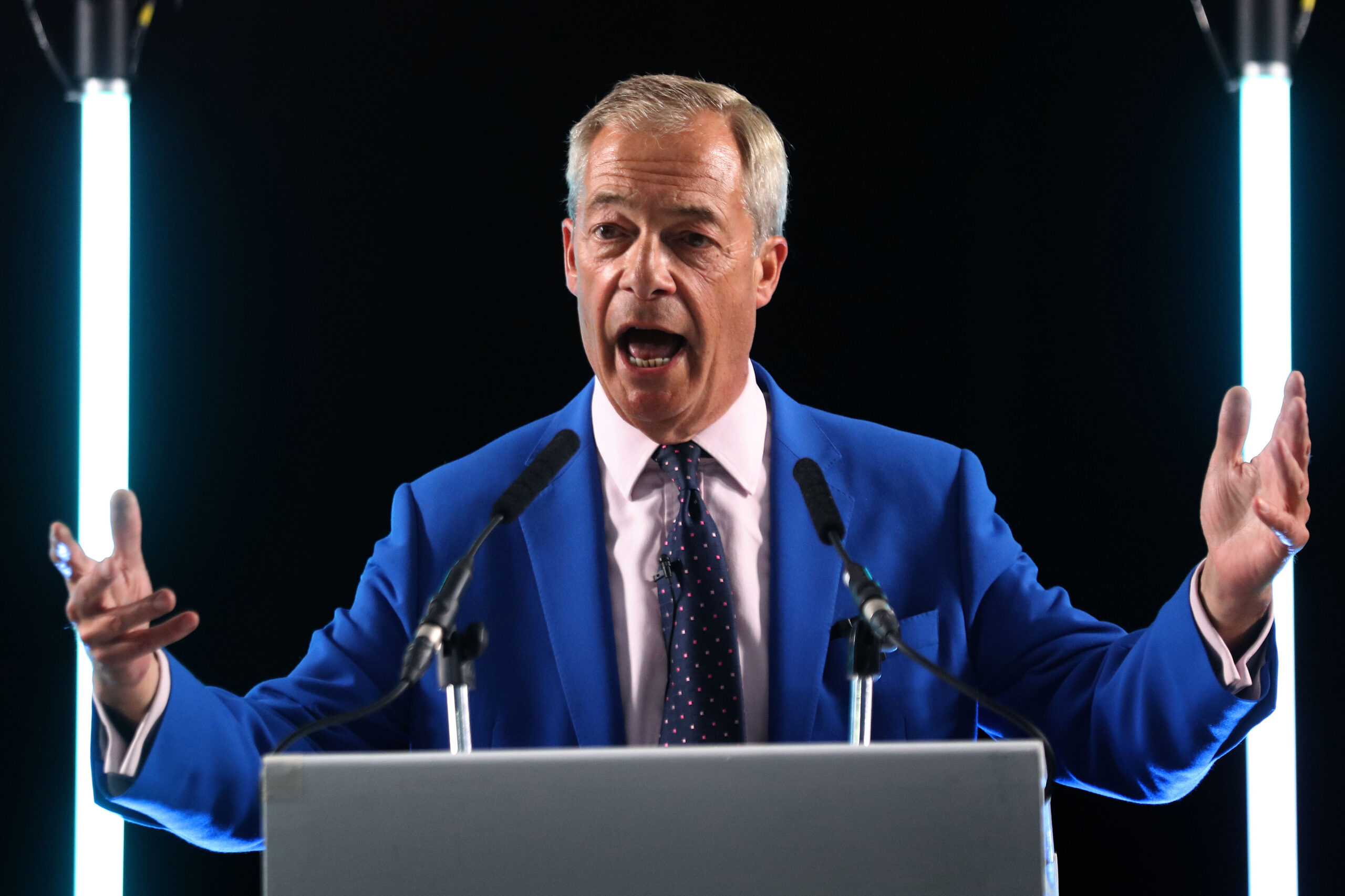
Nigel Farage, the leader of the populist Reform UK Party — which has led national opinion polls since April 2025 — posted a video telling his followers to react with “pure, cold rage” after the Nowak bodycam footage was released, saying that it demonstrated anti-White discrimination, echoing the two-tier policing conspiracy.
Although other political leaders in the UK condemned the violence in Belfast and Southampton and challenged such views, some mainstream parties — in the UK and elsewhere in Europe — have adopted some of the language of anti-immigrant parties or implemented harder line policies on migration.
That isn’t necessarily a way to take the heat out of the debate, says Aaron Winter, senior lecturer in sociology at Lancaster University, who studies racism and extremism. “They’ve managed to mobilize people’s distrust, their anger, their grievances, and they’re not going to stop because the government has taken on some of these policies,” says Winters. “They might actually get worse.”
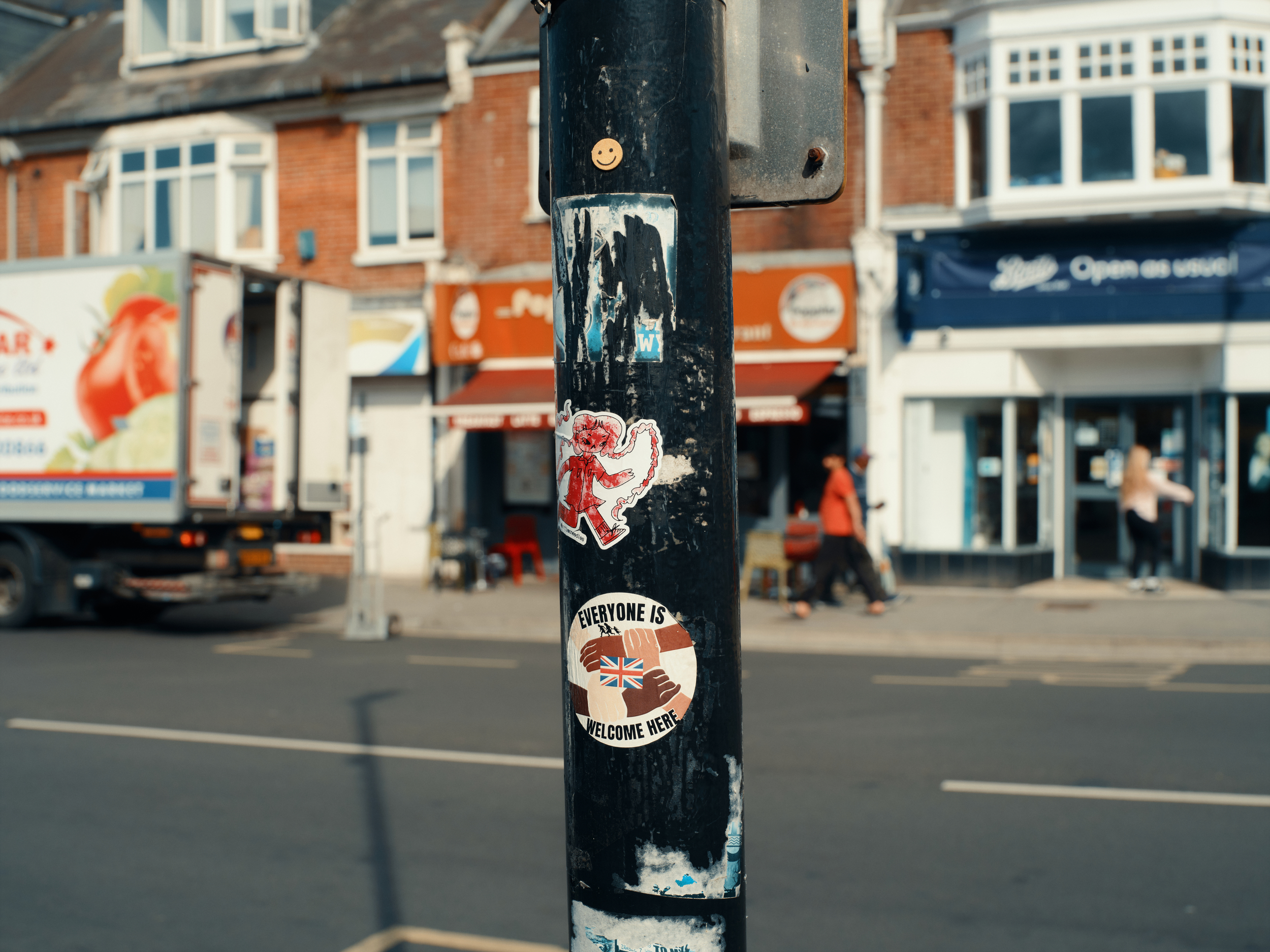
In Belfast, Saeed echoes that view. “When you say immigration is a problem, you’re not looking at immigrants as individuals with their own unique stories, with their own unique backgrounds, with their own unique contribution to the society,” he says. “That establishes this causality where if a person of color does something, then every person of color becomes a potential — I don’t want to use the word, but — ‘enemy’.”
That sense will have been compounded after pictures emerged on Thursday of a replica mosque on top of a bonfire in Northern Ireland — part of the annual July 12 commemorations — with a sign attached saying Secure Our Borders. The incident has been condemned as by local community groups.
In the month since the rioting, Saeed says he has had to think very carefully about where was safe to visit.
“I had to bring my daughter home from school early, and I had no explanation to give to her. ‘Why are we going back early today?’ It’s because there are protests against people of the same skin color as us,” he says. Weeks later the shock of the violence lingers. “The sense of security has been completely shattered.”
Copyright 2026 Bloomberg.
Topics
USA
