


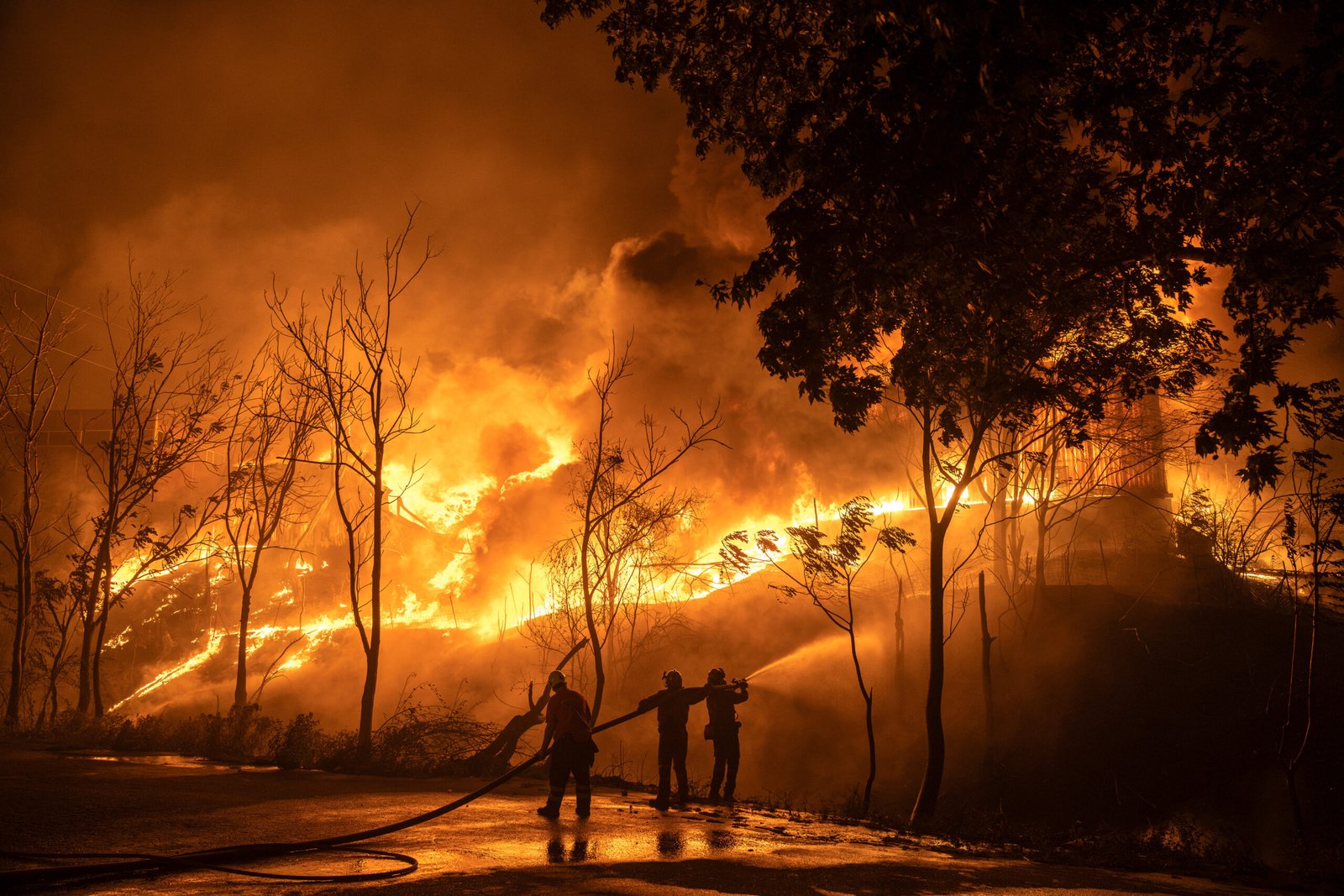
Severe droughts across Europe this summer led to huge wildfires, disrupted transport on critical routes, threatened power plants and hit corporate earnings across the continent. The credit markets are mostly unmoved.
The extreme weather is a reminder of the growing risk that climate change poses to European economies, but that is yet to be reflected in spreads, credit default swaps or ratings — all key indicators of the health of credit markets.
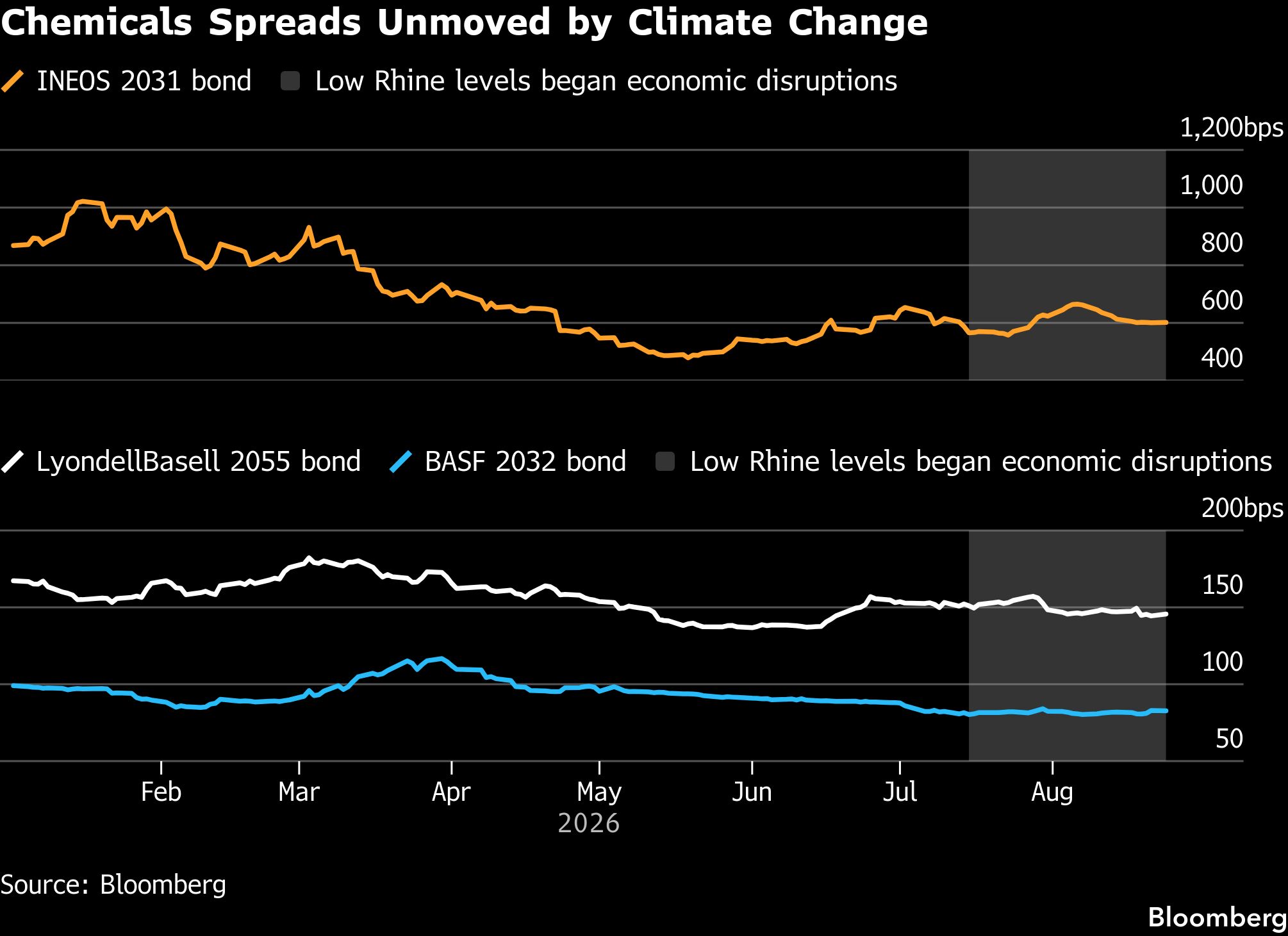
That is true even at companies in the chemicals industry whose exposure to the drought was visible. Spreads on debt issued by chemical companies BASF SE and LyondellBasell Industries N.V. barely moved after low water levels on the Rhine disrupted production at several of their plants. INEOS owns factories in Cologne that have had to find alternative shipping routes for products; its spreads are tighter than at the beginning of the year, as the financial boost for the sector from the Iran War helped offset the disruption.
But experts said that in the long term, climate risks will have to start being reflected in the credit markets.
“Capital markets and equity markets don’t react to climate change, they don’t price it,” said Aline Schuiling, senior economist at ABN AMRO. “You know the metaphor of the boiled frog, where it’s happening so slowly that people become a bit complacent.”
Limited Reaction
The limited reaction in markets to the summer’s drought reaches beyond the chemicals industry. A Hungarian nuclear power plant experienced a near-total shutdown due to low water levels in the Danube, yet a note from S&P looking at its owner, MVM Energetika, found the situation “manageable” from a credit perspective. KBRA found Spanish wildfires to have “limited” impact on its universe of rated-residential mortgage-backed securities.
The Euro iTraxx index of CDS tightened in late July to early August, approaching pre-Iran war levels.
But the large players in the chemical business are a case study in why credit markets haven’t reacted strongly to emerging climate risks. These are large, diversified companies, some of which have already begun to adapt their operations after previous droughts — such as a severe event in 2018, which also lowered river levels and led to factories shutting down.
“Chemical companies can pass the negative consequences on consumers or downstream firms in the form of higher prices, so this natural disaster may have no impact on their profits and credit risk,” said Marco Pagano, professor of finance at the University of Naples.
Companies also have mechanisms to limit the cost of climate disruptions. During the droughts this year, several European chemicals companies declared a force majeure, a contractual provision that means they aren’t penalized for failing to meet their obligations during natural disasters. BASF couldn’t meet its obligations on a compound in soap and shampoo, a company spokesperson confirmed to Bloomberg. LyondellBasell did the same for a component of rubber, Platts reported.
LyondellBasell declined to comment. An INEOS spokesperson said that the company is “actively optimizing operations and managing logistics to minimize disruption” and has contingency plans in case water levels decrease further.
Though this week brings some rain to Europe, experts say it is not enough to ease the drought. Germany’s Federal Institute of Hydrology expects that water levels won’t recover substantively before early October.
Other factors have played in chemical companies’ favor. The war in the Middle East has disrupted supplies of some petrochemical products. INEOS, among others, has been able to step in to fill gaps.
Larger companies might be able to outcompete smaller rivals as the challenges from climate change become more pronounced, which could help explain the resilience of their spreads, according to Pagano.
Investors are likely to look more closely at individual companies’ logistics, Laura Cooper, head of macro credit at Nuveen, said, and examine “how they transport inputs and finished goods, and how much they have invested in making those operations more resilient. These differences may create both challenges and opportunities across sectors.”
Several market participants said they’ve escaped any real impact on their portfolios from extreme weather in Europe or North America. They’re mostly focused on individual credits, rather than macroeconomic impacts, they said, and no one issuer has experienced a catastrophic issue so far. Some said they were starting to look for investment opportunities as Europe tries to adapt to its new normal, and are considering industries such as fire protection. Others said they aren’t thinking about climate change at all.
Wider Impact
The broader economic impacts of climate change are significant. EU-wide GDP could be reduced by around 1% this year due to extreme heat, according to research from Triodos Bank. Disruptions to supply chains and agricultural production are likely to increase inflationary pressures and weight on corporate earnings.
Extreme heat has led to companies changing their investment plans. A Barclays Plc survey found that some 60% of UK businesses are already spending, or plan to spend on adaptation measures after successive heatwaves this summer.
The impacts are going to grow and accumulate. As rating agency Moody’s said in a report this month, climate change should be seen as a “chronic, compounding risk — not just acute shocks.”
“These costs tend to build up over time rather than appear suddenly, so they’re often underestimated,” Mohsen Rahnama, head of catastrophe modeling, insurance solutions, at Moody’s, said. “Until a prolonged drought or heat wave leads to production slowdowns, supply chain disruptions, or legal claims.”
Some investors are already looking at climate reports from banks and avoiding insurance firms with large exposure to catastrophe risk, while ratings agencies consider environmental impacts in credit reports. “It is not the be all and end all for an investment decision, but it is another factor we need to look at,” said Bryn Jones, head of fixed income at Rathbones Asset Management.
But as long as earnings hold up in the short term, credit investors have no compelling reason to mark down debt.
“The slow reaction does not necessarily imply that investors are not aware of physical climate risk,” said Vanja Piljak, professor of finance at the University of Vaasa in Finland. “Rather,” she said, “they perceive physical climate risk as longer-term risk which does not have immediate effect on corporate default probabilities.”
Related:
Copyright 2026 Bloomberg.
Topics
Europe
