


Germany’s power grid was hit twice in a single day on Tuesday, with incidents on opposite sides of the country knocking units of coal-fired power plants offline and authorities investigating possible terrorist or extremist motives.
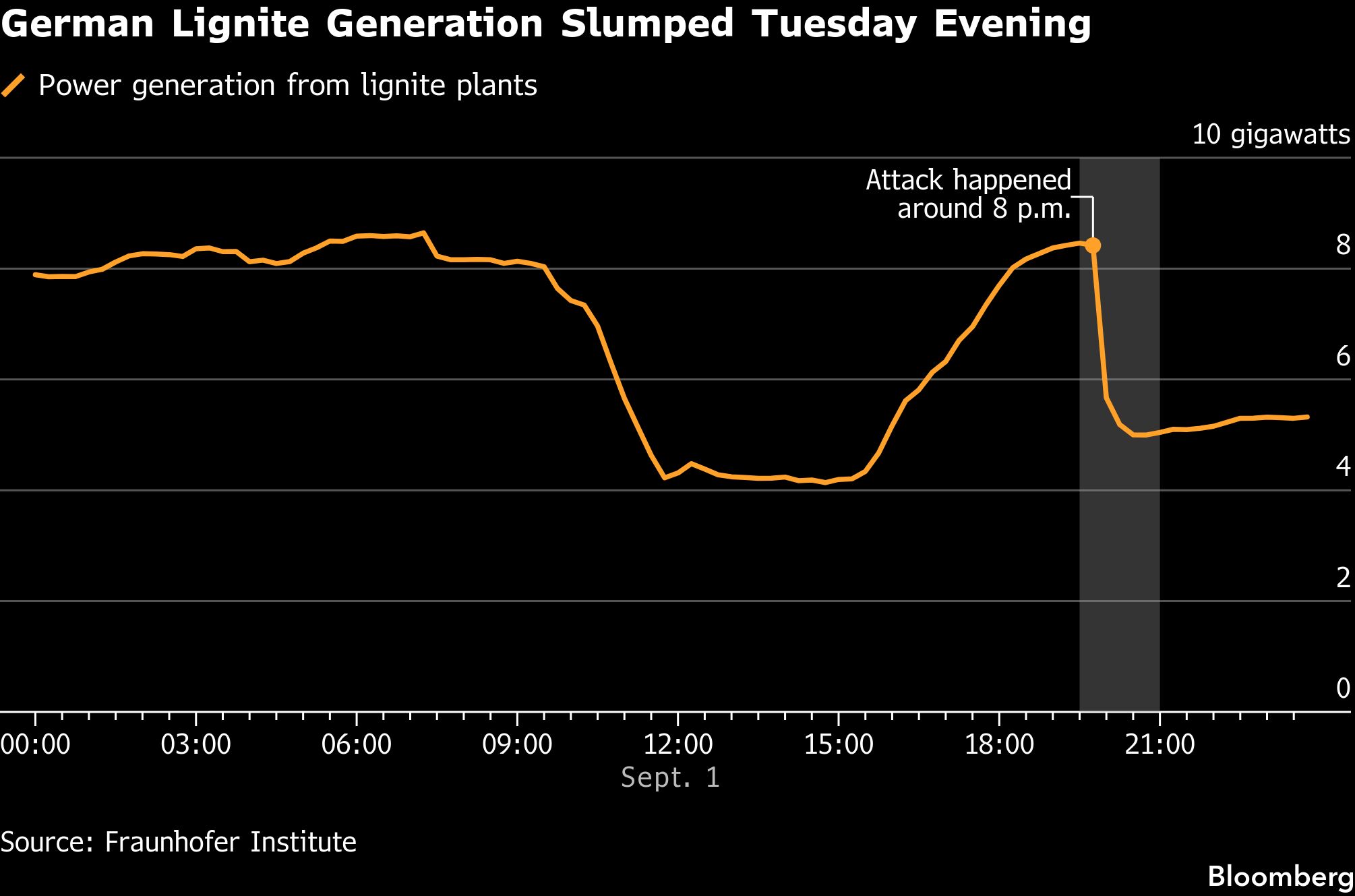
The latest incident occurred in the industrial heartland surrounding the Rhine river on Tuesday evening, shutting off five units of RWE AG’s lignite-fired power plants with a combined capacity of 4.2 gigawatts. Earlier that morning, unknown perpetrators damaged several transmission lines in eastern Germany using homemade projectiles, triggering a temporary outage at LEAG’s Jänschwalde coal plant.
Germany has faced several attacks on its energy infrastructure this year, including a major arson attack in Berlin that caused a widespread blackout. While the attackers behind the latest events remain unknown, Germany is on high alert following a failed drone attack at Leipzig airport, which authorities have blamed on Russia.
Authorities are examining whether the two events in the west and east are connected, said Herbert Reul, the interior minister of North Rhine-Westphalia, in a press conference on Wednesday. Investigators for the west German attack are exploring two possible motives — foreign state-directed sabotage and far-left extremism — while police in the eastern state of Brandenburg have opened an investigation that includes suspicion of forming a terrorist organization.
Grid operator Amprion said the incident on Tuesday evening occurred near its substation in Rommerskirchen in the Rhineland. It added that general power supply was not affected at any time and system stability was guaranteed.
RWE said the five lignite-fired power plant units included Neurath G and F and Niederaußem H, G and K. Most had been feeding electricity into the grid at the time of the incident. RWE said it will reconnect most of the units, with a combined capacity of 2.6 gigawatts, on Wednesday, and the remaining 1.6 gigawatts is expected to return over the weekend.
The local Essen police force said it was operating on the assumption of “a deliberate act, a criminal offense.”
Countries across Europe are racing to harden power grids against sabotage, cyberattacks and military threats. The push follows Russia’s repeated attacks on Ukraine’s energy infrastructure and a series of sabotage incidents across Europe.
Read more: Germany Blames Russia for Attempted Drone Attack, Expects More
The German economy ministry declined to comment on details of the two incidents, but said “acts of sabotage against critical infrastructure pose a serious threat.” Russia’s war of aggression, the rise in acts of sabotage targeting the economy and the increasing frequency of extreme weather events make it clear that Germany be better prepared with regard to critical infrastructure, a spokesperson added.
According to Talha Torlak, who leads short-term power trading at Vitus Commodities, there was a “very extreme deficit” on Tuesday evening between 8 p.m. and 9 p.m. after RWE’s lignite units went offline. That pushed preliminary imbalance prices — the cost of correcting unexpected gaps between electricity supply and demand — to €5,000 per megawatt-hour. After 9 p.m. the system quickly stabilized, he said.
“The grid handled the incident well,” said Leonhard Gandhi, a researcher at Fraunhofer Institute, adding that the situation would only become critical if several such attacks occurred simultaneously or targeted central grid nodes. “That is why the attempted sabotage that same morning near Jänschwalde is the truly alarming news,” he said.
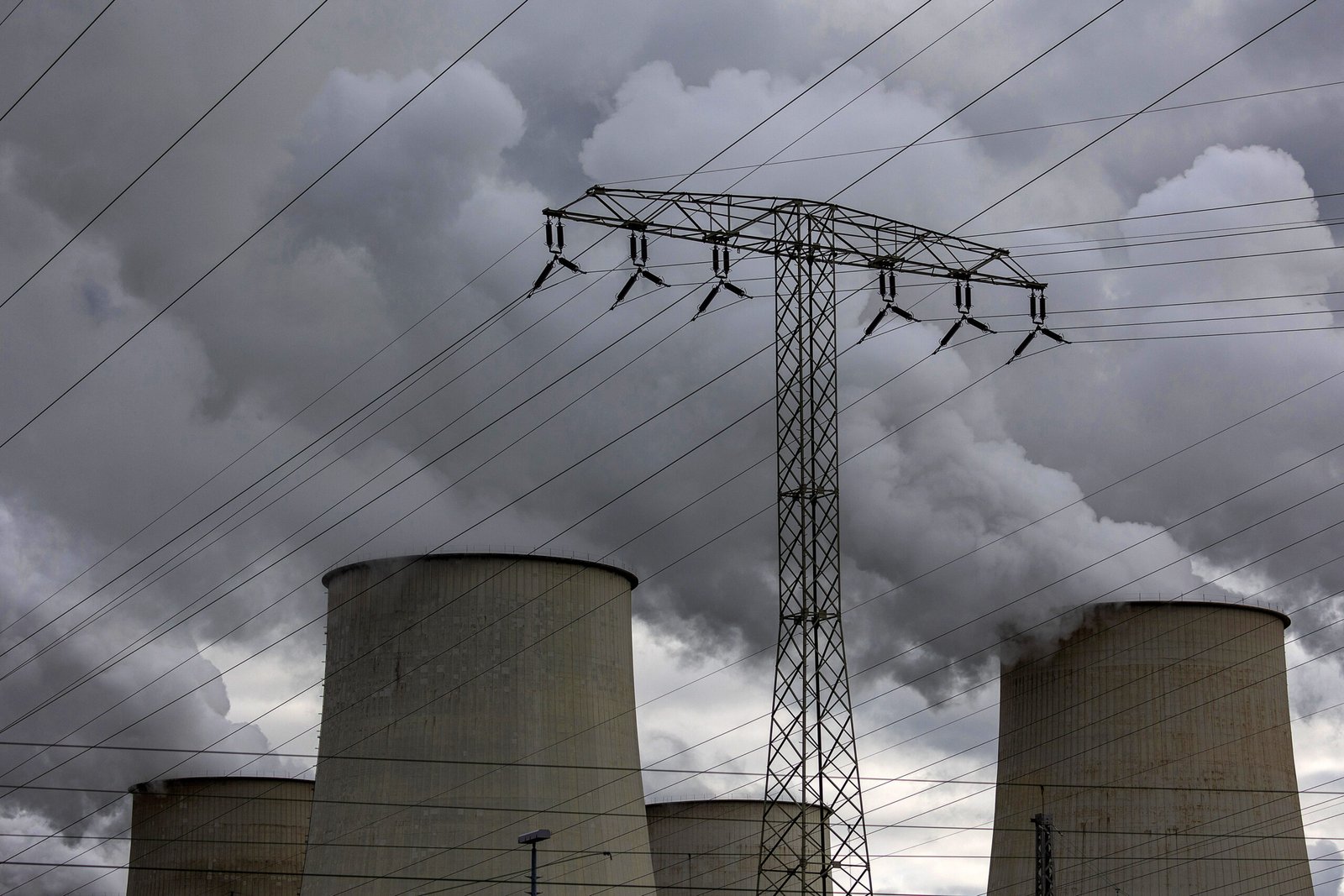
Photograph: Germany has faced several attacks on its energy infrastructure this year; photo credit: Krisztian Bocsi/Bloomberg
Copyright 2026 Bloomberg.
The most important insurance news,in your inbox every business day.
Get the insurance industry’s trusted newsletter
