


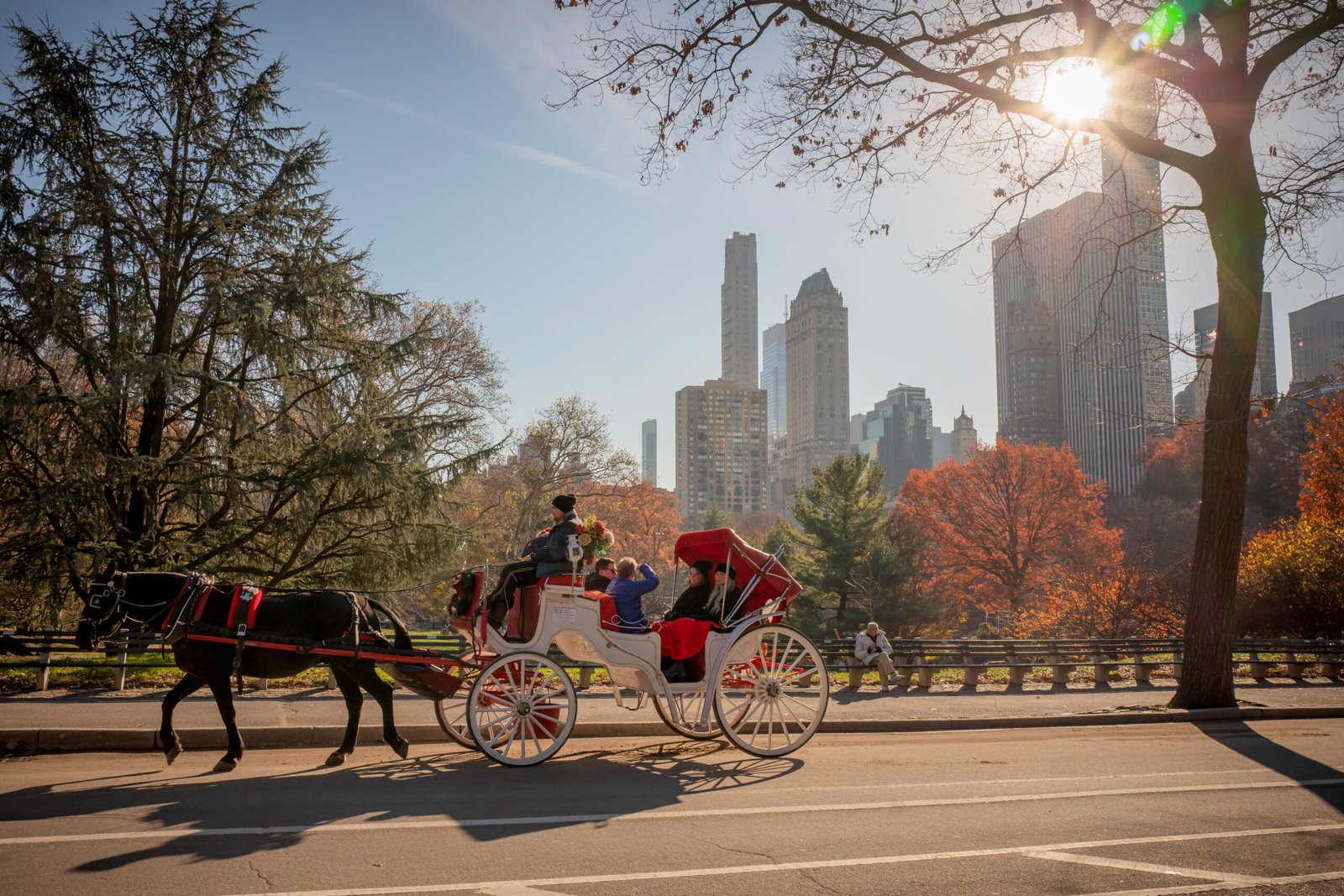
New York’s City Council voted to ban horse-drawn carriages, ending a Central Park tourist staple dating to the 19th century after years of debate over the horses’ place on city streets.
The Council voted 40 to 7 to pass the bill Thursday, which Mayor Zohran Mamdani is expected to sign. Two members abstained. The ban takes effect June 1, 2028, and prohibits the sale of horses for slaughter or their transfer to other carriage companies.
The vote ends a fight that has simmered for more than a decade, pitting the city’s roughly 150 carriage drivers and their union against animal-rights advocates and drawing in politicians and celebrities on both sides. Supporters see the clip-clop of hooves through Central Park as part of New York’s appeal, romanticized in film and television; critics say horse-drawn carriages are an anachronism ill-suited to the city’s traffic, pollution and crowded streets.
As the council prepared to vote, President Donald Trump weighed in, criticizing the city’s lawmakers.
“The Horse-drawn Carriage in New York City is a quintessential New York experience,” Trump, who was born in New York, wrote in a social media post. “So sad that, for political reasons, we will see it go!”
The legislation includes a promise to construct a plan by April 1, 2027, for aiding carriage drivers in finding new jobs after the ban takes effect. That plan could include financial compensation for carriage drivers and owners, but doesn’t guarantee it.
Sixty-eight horse cabs are currently licensed to operate in Central Park, under a system that’s capped the number of carriages since the second World War. In addition to the drivers, the industry has more than 180 horses, according to industry spokesperson Christina Hansen.
Carriage industry employees and horse and stable owners say the bill doesn’t go far enough in providing for their financial futures.
“This bill is a train wreck of constitutional and due process violations,” John Samuelsen, president of the Transport Workers Union International, which represents the carriage drivers, said in a statement. “It offers nothing concrete for blue-collar drivers and carriage owners who will be financially crushed, stripped of their jobs, their licenses, expensive city-issued medallions, small businesses, and way of life.”
The union has vowed to seek a temporary restraining order after Mamdani signs the bill.
“We will see them in court,” said Alexander Kemp, administrative vice president for a New York chapter of the union. “This fight is not over.”
The carriages have long faced opposition from animal rights activists who argue that forcing the horses to work in urban conditions damages their long-term health and is unsafe.
“It’s the end of the road for a vile industry that has forced horses to haul heavy carriages through chaotic traffic and punishing weather until they collapsed and died,” said Ashley Byrne, director of animal-rights organization People for the Ethical Treatment of Animals.
The issue came to the forefront of city politics when former Mayor Bill de Blasio pledged to shut down the industry on his first day in office, while he was running for mayor in 2013. His plan ultimately failed, despite repeated attempts.
Efforts to ban the carriages reemerged in recent years, after a string of accidents. Since May 2025, at least seven people have been injured in carriage-related incidents, including drivers and tourists. Momentum for banning the carriages swelled after a carriage-related death in June, when an 18-year-old tourist named Romanch Mahajan fell off of a horse carriage and died, while with his family on a trip to visit the city.
“Our hearts break for the family of Romanch Mahajan,” the Central Park Conservancy said in a statement following the passage of the bill. “In the modern era, carriages pose a serious — and even fatal — safety risk to Park visitors, carriage drivers, and the horses themselves.”
PHOTO: A horse drawn carriage drives through Central Park in New York. Photographer: Anthony Devlin/Getty Images
Copyright 2026 Bloomberg.
Interested in Trends?
Get automatic alerts for this topic.
