


OpenAI plans to spend tens of billions of dollars on a massive new data center near Savannah, Georgia as part of the ChatGPT maker’s push to keep up with surging demand for artificial intelligence software.
The startup has contracted with Georgia Power Co. and secured 3.2 gigawatts of energy for the data center complex in Effingham County, potentially setting the facility up to rank among OpenAI’s largest to date. Several hundred megawatts are expected to come online starting in 2028, with the rest of development extending through 2032. A single gigawatt is enough to power about 750,000 US homes at any given time.
OpenAI committed to spend $20 billion in the county in order to qualify for an incentive package that will be voted on this week, the company said. At the full 3.2-gigawatt size of the project, the cost would probably be more than $30 billion, said Sachin Katti, vice president of compute strategy at OpenAI. The startup is currently looking for partners to help finance and develop the data center, Katti said, and may opt to do some of the operation itself.
OpenAI Chief Executive Officer Sam Altman has previously said he expects the company to spend trillions of dollars on physical infrastructure to support its long-term AI ambitions. The company has partnered with developers on large data centers in Europe, the Middle East and several US states as part of its Stargate initiative.
In recent months, however, OpenAI has pulled back from some projects in the UK and Norway. The firm also opted not to expand its footprint at its flagship Stargate campus in Texas. Those moves coincided with a broader effort within OpenAI to streamline its investments and product portfolio as it looked toward a potential Wall Street debut.
The company’s approach to Stargate has changed, too. Originally conceived as a joint venture with Oracle Corp. and SoftBank Group Corp., Stargate projects have since featured different combinations of partners. OpenAI has also begun to play a larger role in planning and designing the facilities, including the new one in Georgia.
“Now that we have gone through two or three generations of compute, there’s a bunch of lessons around how these things should be designed that can cut both costs as well as make it faster to build the stuff,” Katti said in an interview. “That’s why we are putting our foot forward and leading the design and the whole process here.”
OpenAI aims to standardize its AI data center designs and release those publicly as a reference that other companies can use, Katti said. Its goal is to open-source designs and plans for data centers, hardware and networking, he said, with an initiative similar to the Open Compute Project co-founded by Meta Platforms Inc. in 2011.
Other AI rivals have moved aggressively to shore up computing resources. Anthropic PBC has inked a series of deals in recent months to meet demand, including an agreement to access more than 300 megawatts of capacity from a large SpaceX data center in Memphis known as Colossus 1. Meta has committed to spend more than $250 billion on a single data center campus in Louisiana.
However, a growing number of projects are now running into intense local opposition, as communities and political leaders raise concerns about the impact of data centers on utility prices and the environment. The pushback risks delaying expensive ventures that the tech industry sees as essential to building and supporting AI products.
OpenAI said it will pay the full cost of electrical infrastructure and power to serve the Georgia data centers, noting that state rules prohibit passing costs to existing customers. The company also said its new facility is designed to proactively cut power use when there is high demand to avoid affecting nearby residents. And the data center will employ a “closed-loop” cooling system that circulates the same water in order to reduce use.
OpenAI also said it will pay hundreds of millions of dollars in state and local taxes, alongside plans to set up a community fund and offer credits for local students to use its AI services.
While OpenAI has already met with county officials, it will begin conversations with residents Thursday to hear any concerns that aren’t addressed in the current plan, said Chris Lehane, chief global affairs officer. The company also intends to conduct an independent audit to make sure it’s complying with its commitments, he said
“All issues are going to be local,” Lehane said. “It’s really important to understand it’s not always going to be a cookie-cutter approach.”
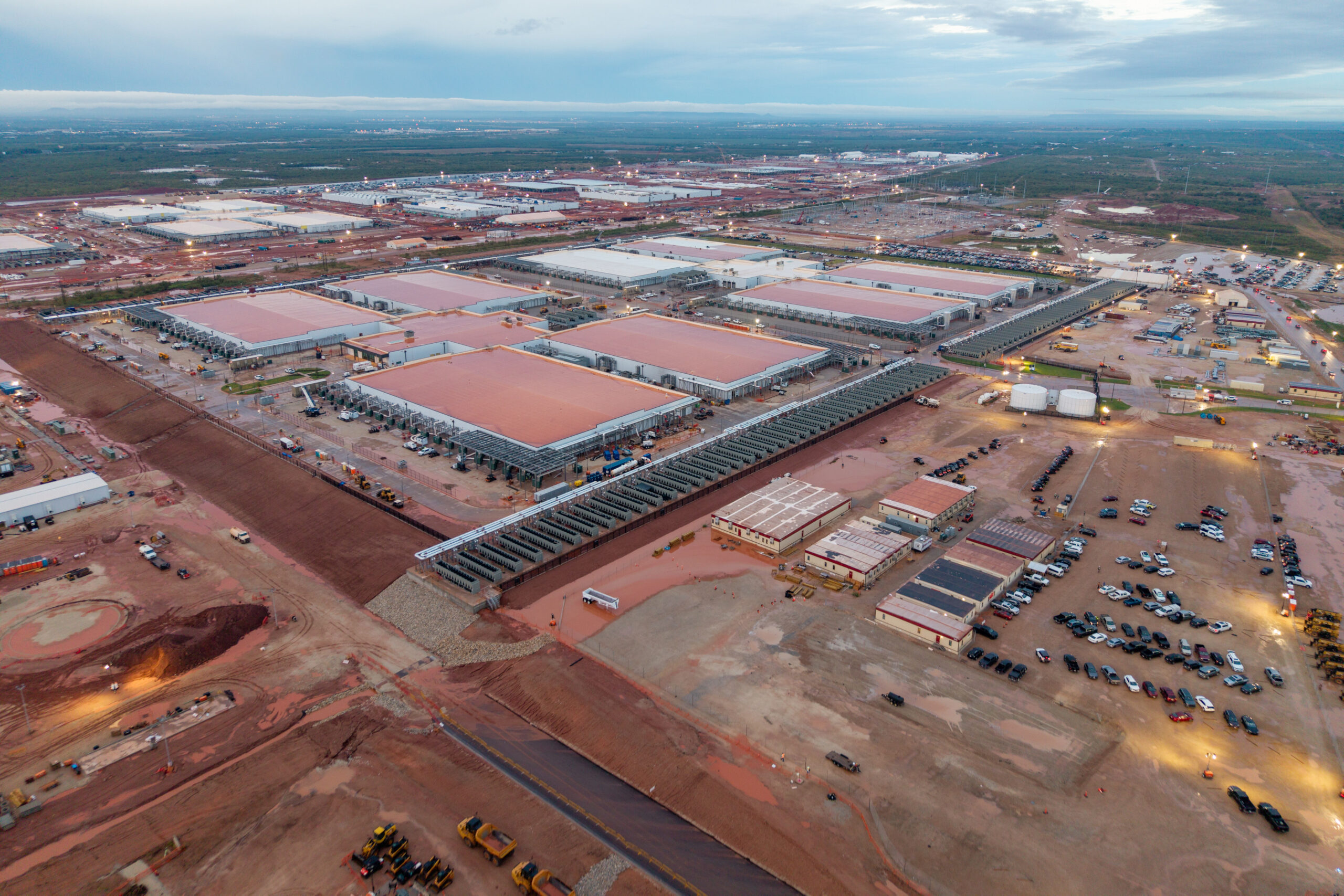
Photo: OpenAI’s first Stargate-branded data center in Abilene, Texas. (Kyle Grillot/Bloomberg)
Copyright 2026 Bloomberg.
Topics
Georgia
The most important insurance news,in your inbox every business day.
Get the insurance industry’s trusted newsletter
